
The wildfire season in California is off to a regrettably raging start. Exemplified by the Coastal Fire, which began on Wednesday, May 11th, in the upscale Orange County area of Laguna Niguel, at least 20 luxury homes were destroyed by the flames. The fire was first reported near the South Orange County Wastewater Authority’s Coastal Treatment Plant and it progressed from there through Aliso Wood Canyon, which is situated between Laguna Niguel and Laguna Beach. Fire officials say that ocean winds blew the flames quickly through the canyons and into hard to reach places for firefighters. The Coastal Fire torched 199 acres and mandatory evacuations were employed for the areas of Coronado Pointe and Pacific Island Drive, with voluntary evacuations in place for hundreds of others. In all, about 900 homes were evacuated in the wake of the approaching flames.
Fire Season in California
Fire season in California is now essentially year round. In the past, the end of fire season was signaled by the first autumn rain, but in recent years trends show that this first precipitation is coming later and later. The 2022 fire season in California is predicted to be significant, especially in the northern California regions. The combination of extreme drought and high temperatures are a recipe for disaster, particularly in the peak fire season months of June through October. With rainfall well below normal across the state and the snowpack in the Sierra melting at record rates, the potential for serious fire incidents remains a critical threat.
Historical Data of California Fire Seasons
In the past, California experienced fire season generally only in the months of May through October, but as evidenced by data from the last several years that is clearly no longer the case.
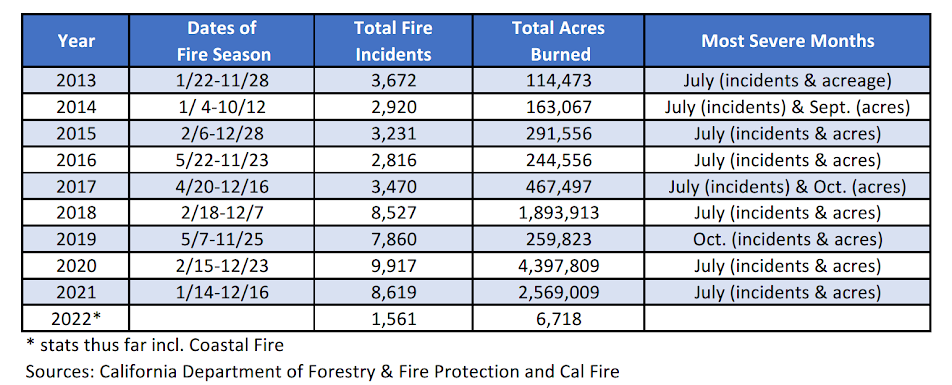
The history of California wildfires clearly show an overall increase in the number of incidents as well as acreage burned each year.
The State of California is taking measures in an attempt to combat the wildfire risk. In February of this year, California Insurance Commissioner Ricardo Lara unveiled new regulations centered around wildfire safety. These new regulations would require insurance companies to take into consideration fire mitigation measures taken by policyholders or applicants in assessing their wildfire risk number as well as premium rates. It will also require insurance companies to be more transparent about policyholders wildfire risk scores used to assess rates.
In addition, residents are strongly advised and in some areas required by fire officials to continuously prep their property by having a fire buffer clear of debris and other flammable materials around the perimeter of their homes. With the growing prevalence and severity of wildfires in California both residents, insurance companies and construction professionals should be sure to stay abreast of developing regulations in this area.
The attorneys at WSHB stand ready to answer and address all questions and concerns. Please do not hesitate to reach out to a member of our team for further assistance.